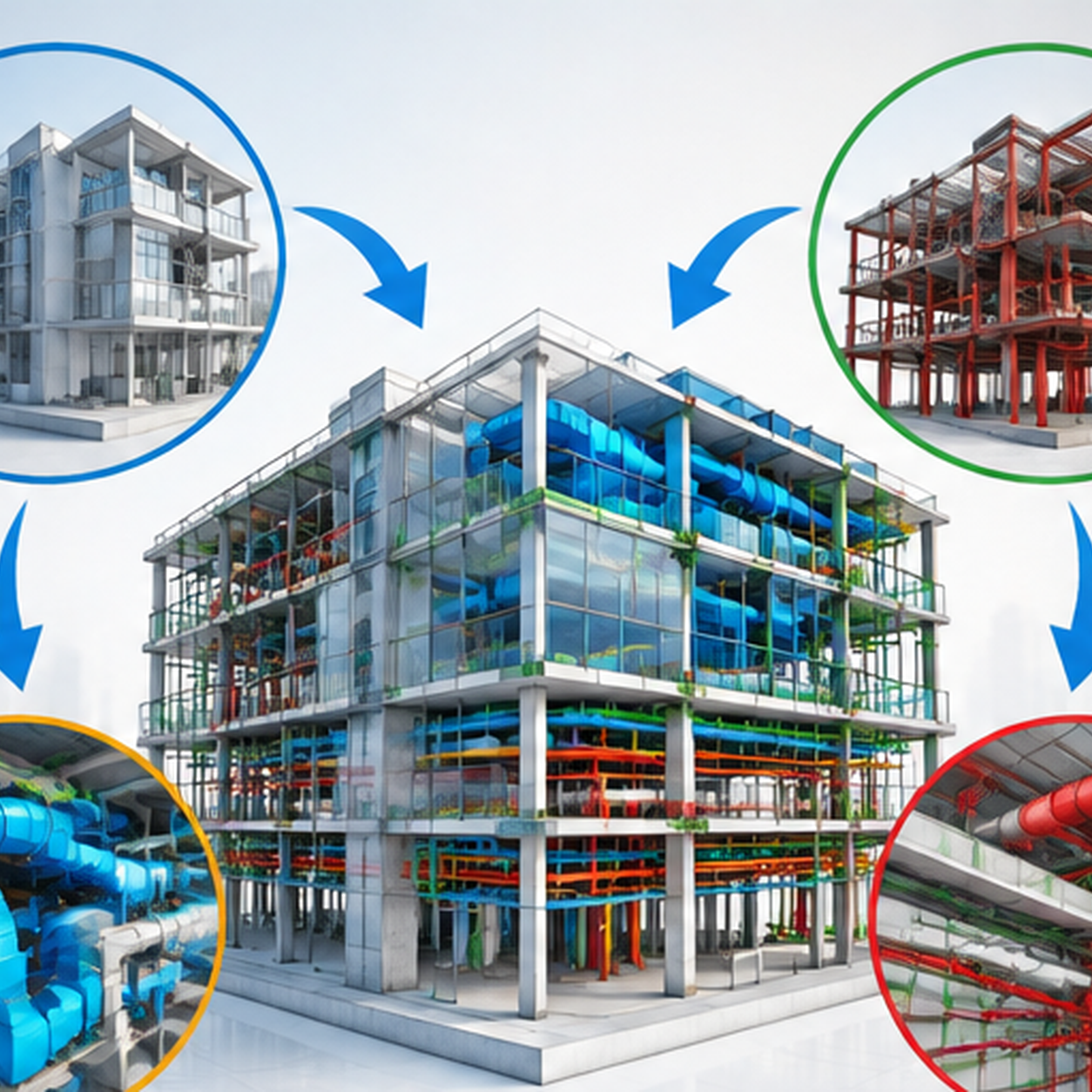
Building Information Modeling (BIM) has transformed the way construction projects are managed, planned, and executed today. With the flourishing of BIM, BIM management has now become a dedicated profession that entails the responsibility of a project’s implementation throughout its lifecycle. This article dives into what BIM management is, its significance in the AEC industry, the roles and responsibilities of a BIM manager, the challenges they face, and how this role offers advantages to the construction industry.
Introduction to BIM Management

BIM management includes overseeing the digital workflows of a project associated with Building Information Modelling throughout its lifecycle. It includes forming BIM strategies, coordinating with the stakeholders, ensuring the integrity of the model, and managing all the model-related data and workflow as well.
Importance of BIM management in Modern Construction Projects
In the era where construction process complexity and BIM data volume are rapidly growing, BIM management is the way to effectively oversee the coordination, efficiency, and accuracy for project managers. By digitising the project workflow and automating planning, design, and coordination, it helps streamline and optimise the project, keeping it on schedule and on budget without compromising BIM model quality.
Role of BIM Management in Construction
One of the core responsibilities of BIM Management is to leverage digital models for greater clarity and coordination and it includes:
Project Visualization
Building Information Modeling allows everyone to have a close look at the building projects and various services in a 3D model setup prior to actual construction. This not only helps in better comprehension of the building envelope but also helps in the decision-making process during the design and construction stage, if any changes are required - a clear example of how BIM allows architects and engineers to visualize outcomes early.
Clash Detection and Coordination
One of the key roles of BIM management is to detect and resolve any clashes between the same or different disciplines, like a pipe for plumbing going through a beam, before it becomes an on-site problem at the construction site. Early identification of any conflicts that are present or might occur not only helps reduce errors but also helps minimize work and keeps the construction project on track.
Recommended Blog: Mastering Clash Detection in BIM for Efficient Projects
Benefits of BIM Management
Improved Collaboration among Stakeholders
BIM management enhances real-time collaboration among project stakeholders by integrating information from all the disciplines - architecture, engineering services, and contractor - into one shared BIM model. This way, the entire construction team works on the same dataset, which helps simplify the communication and minimizes misunderstandings of any sort.
As these BIM models are generally cloud-based models, it also allows the stakeholders of the project stakeholders to view the updated models from anywhere, supporting timely feedback and approvals. With shared workflow and common data environment, teams can resolve issues faster and keep the construction project aligned with the deliverable goal and desired project outcomes.
Cost Reduction and Early Issue Identification
It helps us identify design errors, conflicts, and any inaccuracies early on in the project through visualization and digital simulation. This proactive measure minimizes the number of changes, prevents any expensive rework, and saves a lot of time and money in the long run, a major driver behind the growing adoption of BIM and use of BIM across the construction industry.
For instance, detecting a clash in the BIM model itself costs significantly less than what it will cost if it had to be resolved during on-site construction. Using BIM, teams can minimize waste, optimize resource usage, and enhance overall project outcomes and predictability, reinforcing the benefits of BIM in day-to-day construction planning.
You can also read: Benefits of BIM in construction
BIM Manager Duties

Planning: Creating BIM Execution Plans
One of the key responsibilities of the BIM Manager is to form a BIM Execution Plan (BEP). This report outlines how BIM will be implemented across a project. It includes:
- Defining Building Information Modeling goals and standards of the particular project.
- Defining roles and responsibilities.
- Establishing proper coordination and data exchange procedures.
- Creating model deliverable schedules.
The BEP is the working master plan for the particular project, which entails all the information of the BIM implementation and ensures that everybody knows their tasks, workflows, and expectations.
Coordination: Creating model deliverable schedules.
Effective coordination is the core of BIM management. BIM managers are responsible for aligning all the models from , structure, and MEP disciplines into a single coherent BIM model environment.
It’s the duty of the BIM manager to ensure that the models are in accordance with the standards of the construction project that are set and that all the disciplines coordinate with each other seamlessly. Software such as Navisworks and Autodesk Revit is used for the coordination and clash detection process, allowing managers to solve problems before any major problem occurs on site.
BIM Quality Control
Ensuring high standards across the model is very critical. BIM managers ensures that quality control mechanisms are applied to the model so that the model is accurate, consistent, and adheres to the specified Level of Development (LOD).
This ensures checking geometry, following the proper naming convention, and model structure. Regular audits and validation also help in maintaining the integrity and usability of the BIM model throughout the project lifecycle.
Challenges in BIM Management
BIM Data Management: Dealing with Large Data Volumes
As BIM processes include enormous quantities of data- including 3d models, schedules, asset information, project specification, keeping track of every incoming and outgoing data, and structuring this data is a huge challenge.
Without any proper structure and standard management process of managing this data can lead to making that data very unmanageable and overwhelming. BIM managers have to put in place a really strong information management practice, such as:
- Centralized data environments (CDE)
- Standardized file naming and organization
- Version control and access rights
- Regular data audits
Effective data management helps the team to quickly locate, share, and access the right information during the project.
Skillset: Finding Qualified BIM Professionals
Despite increased use of BIM and its tools, there is still a lack of experts who can use, run, and manage BIM tools and projects. Finding experienced BIM managers who have both technical knowledge and managerial skills is always challenging.
To deal with this challenge organization can invest in:
- Training and development programs
- Certification courses in BIM technologies
- Clear career paths for BIM professionals
Conclusion
BIM Management plays a transformative role in modern construction by aligning technology, people, and processes. From improved collaboration and cost savings to model coordination and data integrity, its impact is both broad and profound.
As construction projects grow more complex, BIM Managers serve as essential orchestrators, ensuring that all elements come together seamlessly. While challenges like data overload and talent shortages persist, strategic planning, training, and BIM adoption can help organizations unlock the future of BIM and its full potential, driving the future of BIM in construction forward and changing the construction landscape as we know it.
Techture offers advanced global BIM services tailored to the AEC industry, specializing in Virtual Design and Construction (VDC), innovative BIM solutions, and strategic BIM consulting services. Our expertise helps construction professionals optimize workflows, enhance project coordination, and drive cost-effective, sustainable outcomes throughout the project lifecycle, from design through to facility management offering complete BIM for construction and BIM construction support.
Frequently Asked Questions (FAQs)
1. What is BIM risk management?
BIM risk management involves identifying and mitigating risks related to BIM implementation and coordination. These include data loss, model inaccuracies, collaboration conflicts, and software interoperability issues.
2. What is a BIM management plan?
BIM management plan - also known as BIM execution plan (BEP) - defines how BIM will be used on a project, what specification will be followed, and what the scope of work will be. It includes- modelling strategies, standards, team responsibilities, workflow, software to be used, and data-sharing protocols.
3. Is the BIM manager a good job?
Yes, with the increased growth of the BIM sector, the BIM manager role is increasingly in demand and has a lot of good career opportunities as well. It is a role that requires a perfect blend of technical know-how and project coordination capabilities as well. It plays a pivotal role in delivering successful, future-ready construction projects.